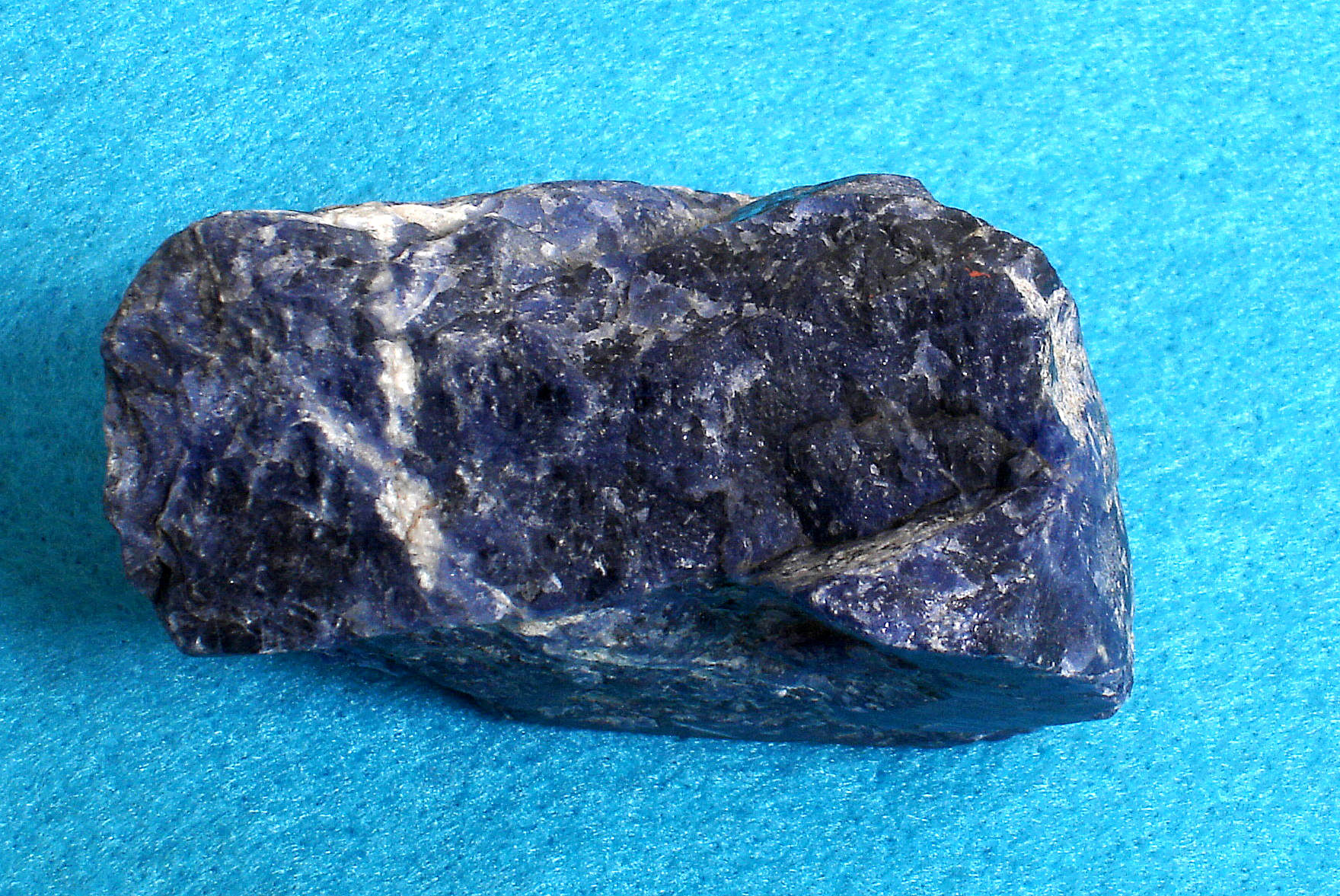
The source identifies this as a sodalite-bearing rock from Brazil. Notice how pale material divides the blue areas; the photograph does not identify every component.
Eurico Zimbres / CC BY-SA 2.5 (via Wikimedia Commons). Original image; displayed at a smaller size.Identification clues
Blue is familiar, but sodalite also occurs in other colours. It is usually found in masses or grains rather than neat individual crystals. Surfaces can have a glassy to greasy-looking shine. In a mixed rock, describe each coloured area separately.
Mineral facts and formation
Sodalite belongs to the feldspathoid minerals and occurs in rocks such as nepheline syenite and phonolite. A specimen can contain sodalite alongside other minerals, so the whole piece need not share one composition or hardness.
Lookalikes and useful comparisons
Sodalite is a mineral species; lapis lazuli is a rock made from several minerals. Both can look blue and white. Gold-coloured flecks, their absence or the shade of blue cannot settle an identification on their own.
Care for a display specimen
Protect it from knocks and harder stones. For an unfamiliar display specimen, begin with a soft dry cloth on sound surfaces. Ask about dyes, coatings or repairs before trying cleaning products, and avoid aggressive scrubbing.
Read the full crystal care guide →Look a little closer
Try this observation.
Sketch the outline of the blue areas in the reference photograph. Mark where pale material interrupts them. Your sketch should describe what is visible without naming every component.
Is every blue-and-white stone sodalite?
No. Colour combinations overlap between minerals, rocks and treated materials. A photograph is a starting point for observations; a reliable label or further examination is needed to identify an unknown specimen.
Sources and further reading
Reference information checked 4 October 2026. These sources describe minerals generally; they do not identify a particular stone.