01 · Observe
Describe it before naming it.
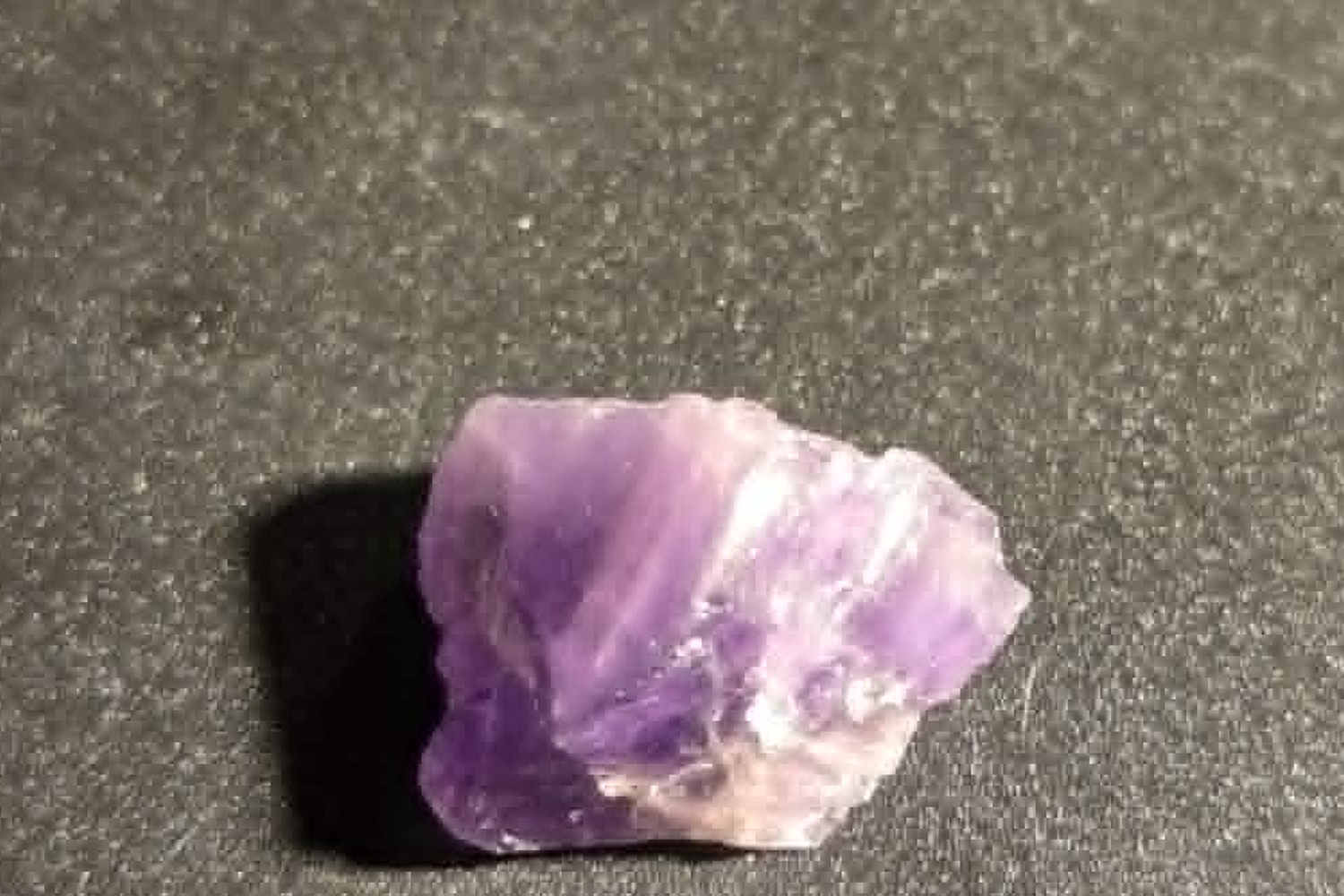
Place the stone on a plain background in ordinary light. Write down its main colour, then look for bands, flecks or cloudy areas. Turn it gently and note what changes. Two stones can share a colour, so keep gathering clues.
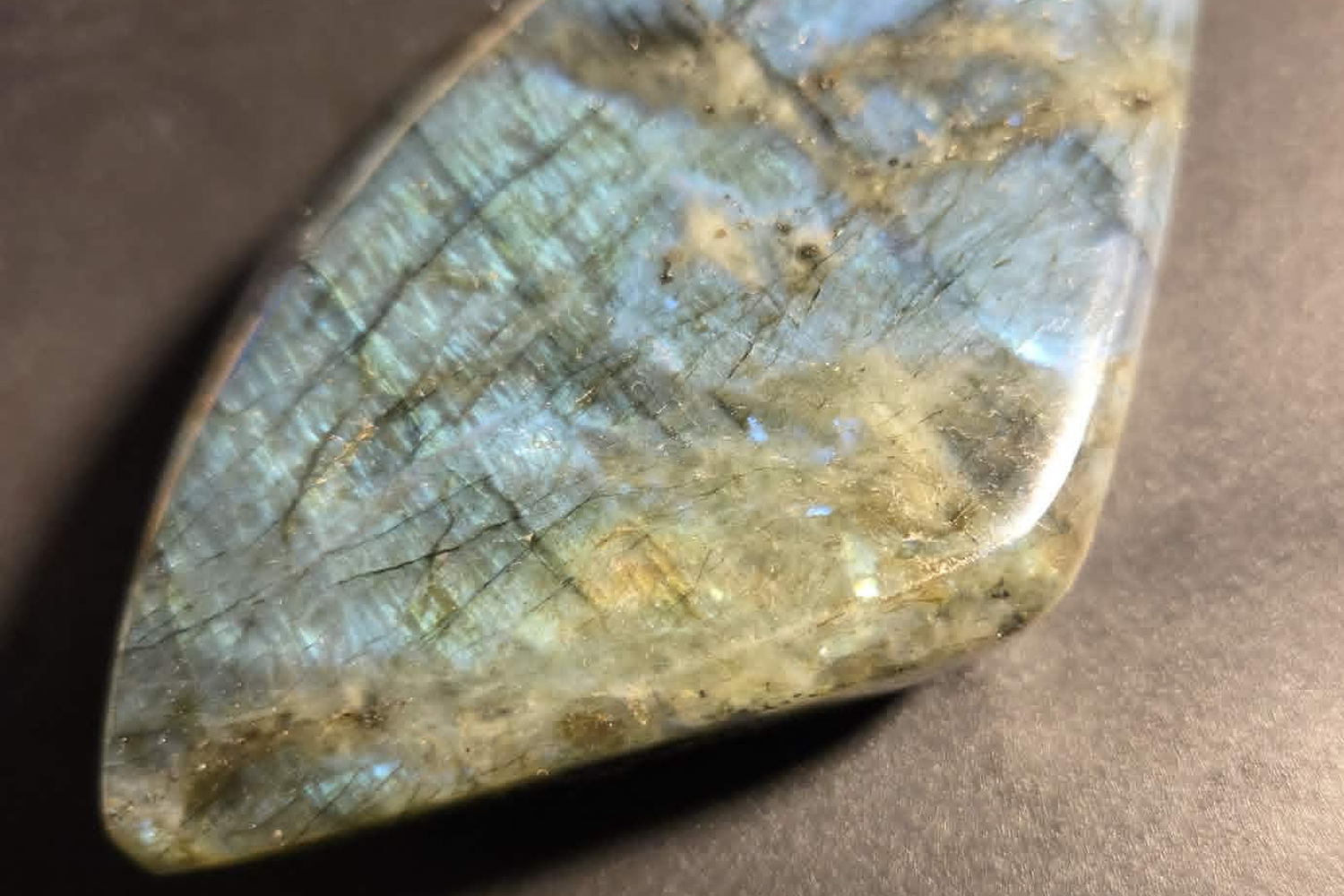
Next describe its lustre: does the surface look glassy, metallic, silky or dull? Look at existing faces and edges. A polished point was shaped by a person; its outline alone cannot tell you how the mineral grew.
Can you see clearly through it, only light through it, or neither? These observations are called transparent, translucent and opaque. Different parts of one specimen can give different answers.
02 · Compare
Make a shortlist, then look for differences.
Choose two plausible guides and compare the details one at a time. A match in colour is a starting point, not a verdict.
- Clear Quartz and Calcite: compare the published shape and cleavage clues. Both can look clear.
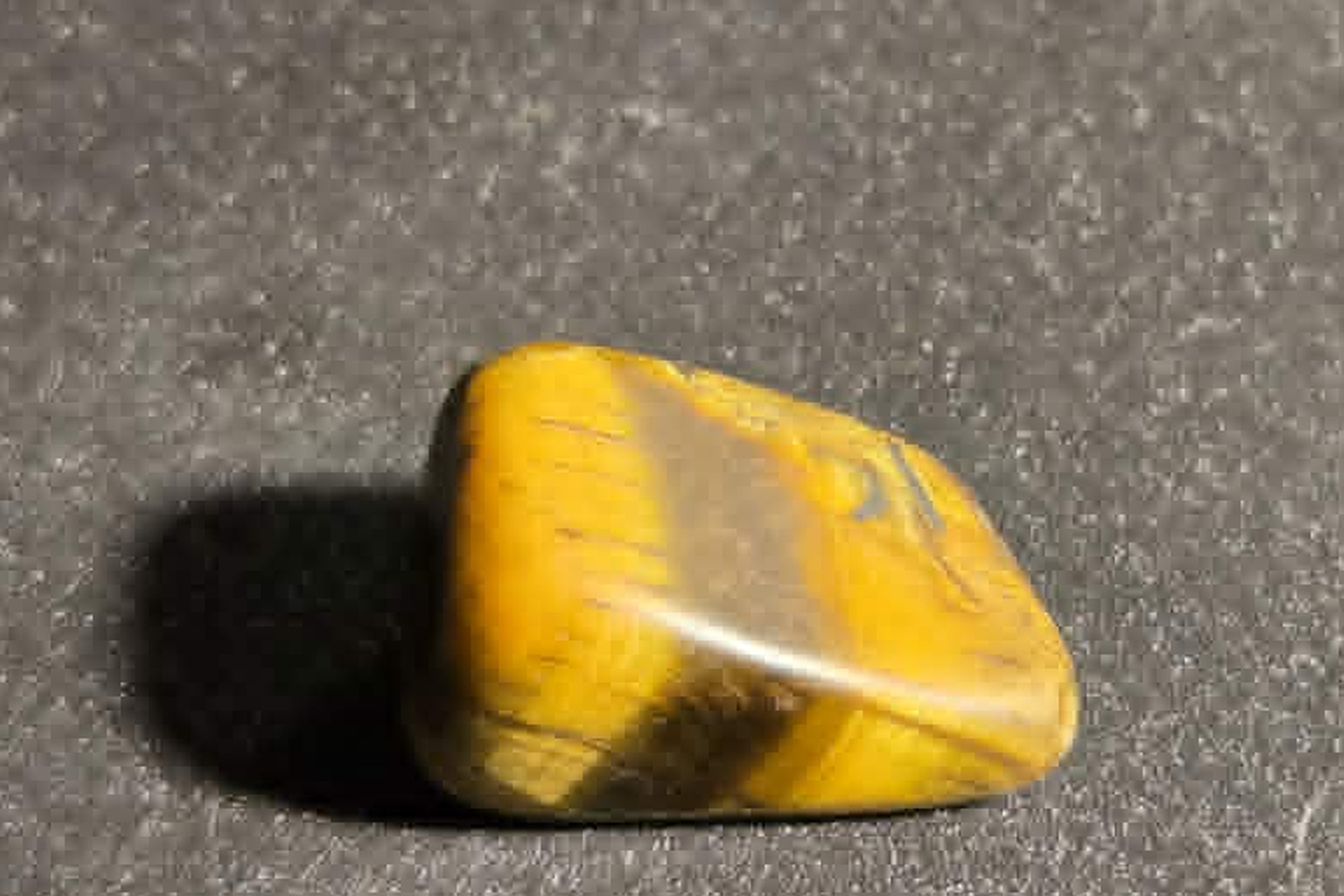
- Pyrite and Tiger’s Eye: compare metallic reflections with a moving silky band.
- Obsidian and Hematite: compare a glassy surface with metallic or earthy appearances.
Our collection photos show individual examples. A reference photo also shows only one specimen, not every possible appearance of that material.
03 · Check the story
Keep a label separate from an observation.
Save the seller’s name, label and any treatment disclosure with your notes. “The label says Citrine” and “I can see orange-yellow crystal tips” are different kinds of evidence. A photo cannot settle every treatment or origin question.
Trade names can describe mixtures or commercial products. Read the notes on Caribbean Calcite for an example. Traditional associations are labelled separately from mineral facts throughout our encyclopedia.
A useful first entry in your notebook
Observed: purple colour, glassy shine, several pointed crystals, some cloudy areas.
Possible match: Amethyst. Still uncertain: identity, treatment history and origin.
A careful “possibly” is more useful than a confident guess. For a valuable stone or a firm identification, ask a qualified gemmologist or mineral specialist what examination is appropriate.
Learn the properties without damaging your stone.
Mohs hardness describes resistance to scratching, not resistance to breaking. Use the hardness values in our guides as reference information for now. Skip scratch, acid and streak tests on your display pieces; do not taste unknown minerals or create dust.
Begin with observation. If further testing is needed, let someone with the right equipment and specimen knowledge guide it.
Read a little further
Learning guide checked 29 September 2026. This page helps you organise observations; it does not identify an unknown stone for you.