Calcite and aragonite are both calcium carbonate, CaCO₃. Their atoms are arranged differently, making them distinct minerals called polymorphs. The chemical formula alone cannot tell you which one is present.
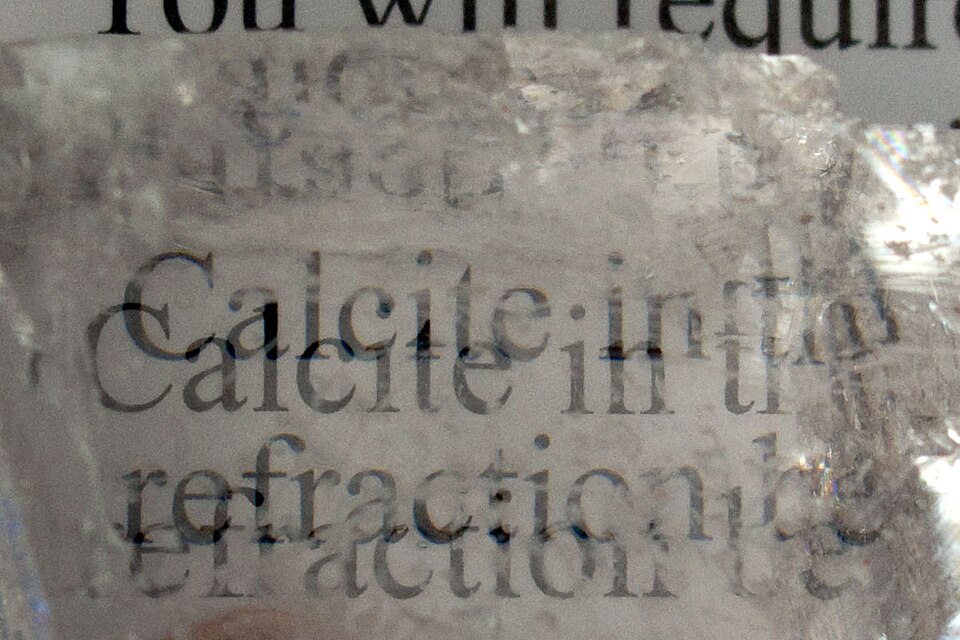
Reference calcite, separate from our collection. This transparent example shows doubled lettering, an effect that is not equally clear in every specimen or direction.
Furrfu / Public domain (via Wikimedia Commons). Reduced-size preview; no further image changes.Aragonite reference specimen
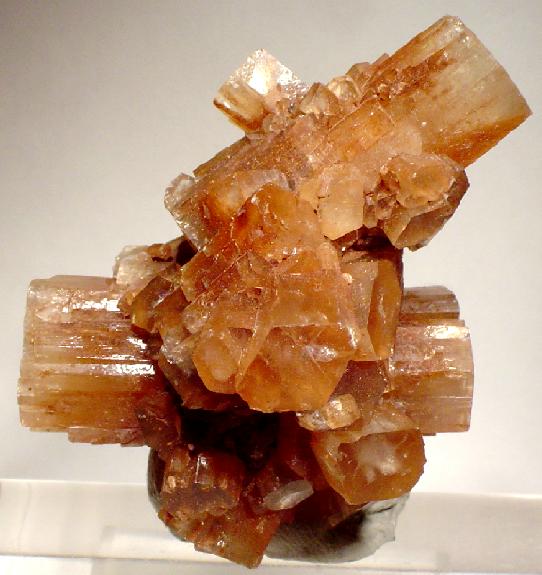
Reference aragonite, separate from our collection. The projecting brown prisms illustrate one growth form, not every appearance of aragonite.
Reference properties describe the materials generally. They do not authenticate the photographed specimens.
Calcite vs aragonite: reference properties
Clue
Calcite
Aragonite
Chemical formula
Calcium carbonate · CaCO₃
Calcium carbonate · CaCO₃
Structure
A different atomic arrangement from aragonite
A different atomic arrangement from calcite
Mohs hardness
3
3.5–4
Shapes you may encounter
Many growth forms; cleavage fragments can look like slanted boxes
Needles, branching groups or clusters of prisms; other forms also occur
Existing cleavage surfaces
Strong rhombohedral cleavage
Less perfect cleavage than calcite
Handling priority
Protect surfaces from scratches and knocks
Support projecting crystals from the solid base
01 · Read the clues
A formula is only part of a mineral’s identity.
Imagine recording the ingredients of two structures without recording how the pieces fit together. That missing arrangement matters. Calcite and aragonite contain the same chemical ingredients in the same proportions, but their crystal structures differ.
This is why a label that says only “calcium carbonate” leaves an important question open. A photograph of a mixed, carved or polished material may not resolve it. Keep the supplied label, any reliable identification and your own observations as separate records.
02 · Read the clues
Compare the faces you can actually see.
The calcite example has broad surfaces, while the aragonite photograph shows crystals projecting in different directions. Follow two or three edges in each image. The photographs make a useful contrast, but other examples of these minerals can have very different shapes.
Aragonite can form twinned groups that look six-sided. That appearance does not make it quartz, nor does it mean every six-sided-looking crystal is aragonite. With calcite, distinguish an existing cleavage face from a growth face or a cut surface rather than treating every flat patch alike.
03 · Read the clues
Similar materials still need careful handling.
Both reference hardnesses are below quartz at 7. Store these pieces so harder specimens cannot rub against them, and support fragile clusters from underneath. Mohs hardness concerns scratching; it does not describe how much force a delicate point can survive.
Do not use acid, scratch a polished surface or break a projecting crystal for this comparison. Our Caribbean Calcite collection label is a trade name. This general comparison does not certify that specimen’s exact composition, proportions or origin.
Try it without damaging a stone
A one-minute observation
Draw one visible face from each photograph, then mark the edges that are hidden. Add a separate note for the supplied mineral name. Decide which part of your sketch records evidence and which part depends on the label.
Does a brown, spiky cluster have to be aragonite?
No. Colour and a cluster outline are not unique identifiers. Aragonite can have other colours and forms, and unrelated materials can make similar-looking groups. Use several clues and leave the identification open when the evidence is incomplete.
Sources and further reading
Checked 5 October 2026. General mineral information supports these comparisons; collection labels are not laboratory identifications.