
01 · Read the clues
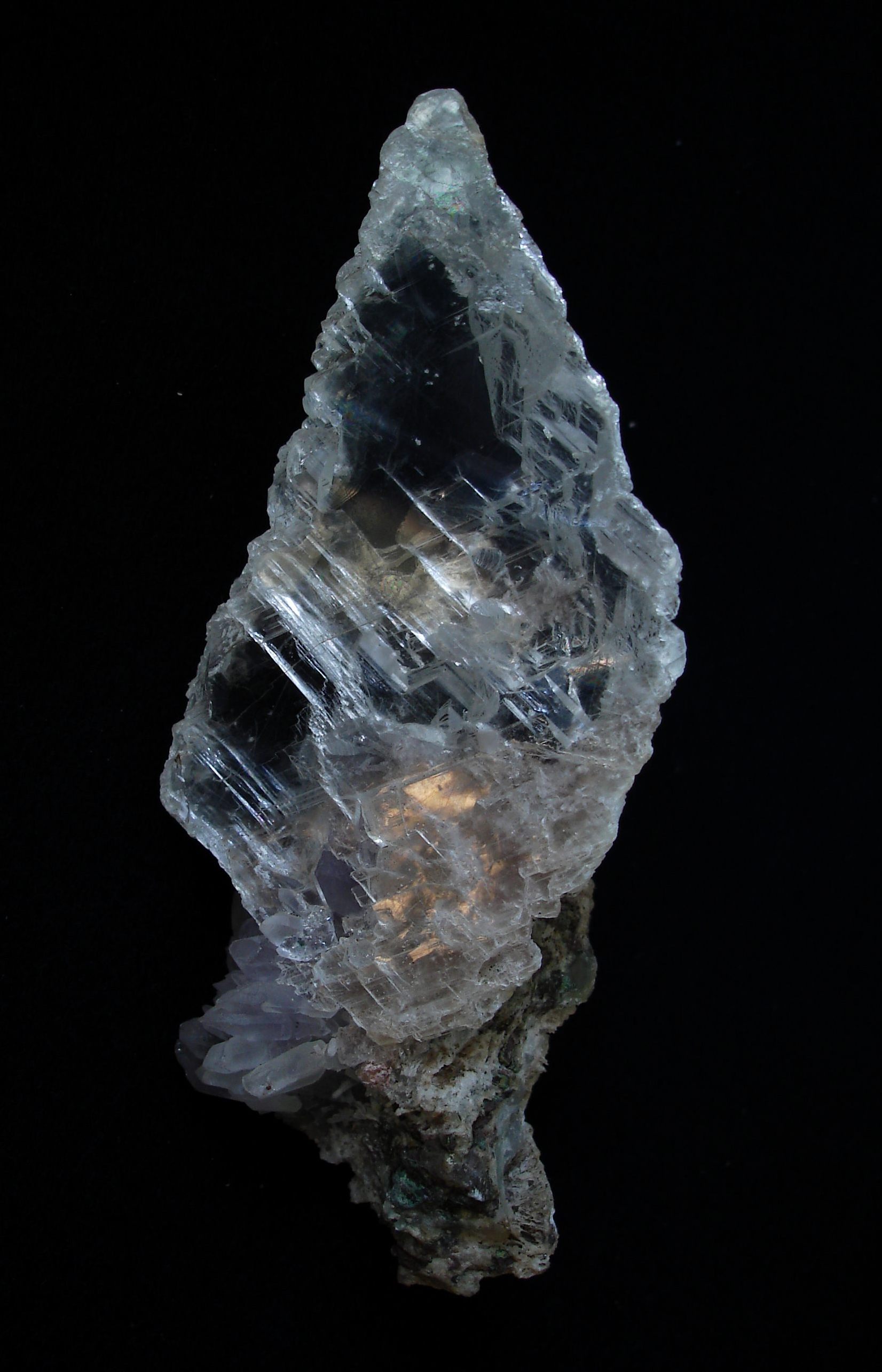
Selenite and satin spar describe different looks.
Selenite usually refers to clear gypsum crystals. Fibrous gypsum is commonly called satin spar, while gypsum can also form rosette-like desert roses. These names describe appearances of gypsum; quartz is a different mineral.
If a shop label says selenite, record what the piece actually looks like too. Is it transparent and flat, or white and fibrous? A polished outline does not establish a naturally grown crystal shape, and a label alone is not an identification report.
02 · Read the clues
Look for surfaces, not a scratch opportunity.
Gypsum can have flat cleavage surfaces and a pearly or silky shine depending on its form. Quartz often shows a glassy surface and curved fractures. Study surfaces that already exist; neither softness nor cleavage needs to be demonstrated by damaging the piece.
In these two photographs, choose an area where light passes through and another where the surface reflects it. Describe those separately. Clear areas, cloudy patches and reflections depend on the specimen and lighting; they are not a two-question identification key.
03 · Read the clues
The practical difference is how you care for it.
Gypsum can dissolve in water. Keep a display specimen dry rather than soaking or wet-cleaning it, and do not peel layers or bend a thin crystal. A very soft dry brush may suit a sound surface; fragile edges are best left alone.
Quartz is much harder, but its points can still chip. Give both pieces their own supported space and avoid sudden heating. Where a specimen includes a matrix, repairs or coatings, ask about those too: the mineral name does not describe every part of an assembled piece.
Try it without damaging a stone
A one-minute observation
Without moving or touching either specimen, trace one clear area in each photograph and describe the surrounding edge. Write one sentence about the appearance and a separate sentence about the handling the reference properties suggest.
Should I use my fingernail to check whether a piece is selenite?
Not for this exercise. Gypsum’s low reference hardness explains why it needs care, but intentionally marking a finished or fragile specimen can spoil it. Begin with visible clues and the label; seek suitable examination if a firm identification matters.
Sources and further reading
Checked 5 October 2026. General mineral information supports these comparisons; collection labels are not laboratory identifications.