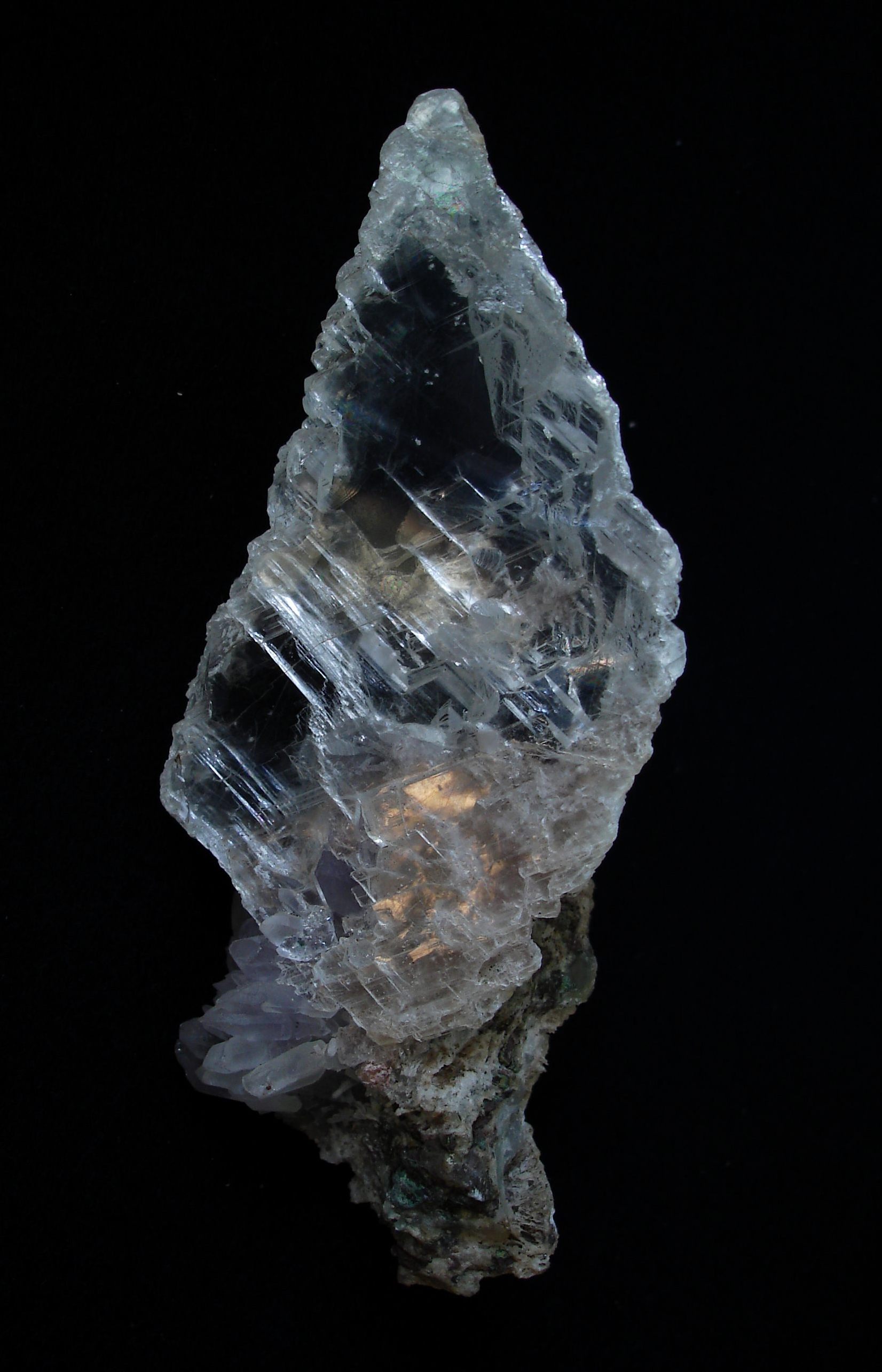
This selenite specimen has clear areas and cloudy, reflective edges. Compare those areas without touching or splitting the crystal.
Eurico Zimbres and Tom Epaminondas / CC BY-SA 2.5 (via Wikimedia Commons). Original image; displayed at a smaller size.Identification clues
Gypsum may be colourless, white or tinted by impurities. Look for flat transparent crystals, fibrous masses or rosette-like clusters. Its shine can be glassy, pearly or silky. These different appearances belong to the same mineral; no single shape is a complete identification.
Mineral facts and formation
Gypsum is a calcium sulphate containing water in its crystal structure. It commonly forms as mineral-rich water evaporates. At White Sands in New Mexico, dissolved gypsum recrystallises as selenite before weathering contributes to the gypsum dunes.
Lookalikes and useful comparisons
Clear gypsum can resemble clear quartz in a photograph, but their hardness and cleavage differ greatly. Do not scratch or split a display piece to demonstrate this. Compare visible shapes and the supplier’s identification instead.
Care for a display specimen
Keep it dry and supported. Gypsum is soft and can dissolve in water, so avoid soaking or wet cleaning. Use a very soft dry brush only where the surface is sound; leave fragile flakes and delicate growths alone.
Read the full crystal care guide →Look a little closer
Try this observation.
Choose one area in the photograph that transmits light and one cloudy area. Describe the difference without assuming cloudiness means the mineral is a different species.
Are selenite and satin spar the same thing?
They are names used for different appearances of gypsum: clear crystals are called selenite, while fibrous gypsum is commonly called satin spar. Record the appearance as well as the label, because shop names are not always used precisely.
Sources and further reading
Reference information checked 4 October 2026. These sources describe minerals generally; they do not identify a particular stone.