01 · Read the clues
Look at shape before shade.
On an uncut cluster, follow a face towards its edge. Quartz often has elongated, six-sided crystals with pointed terminations. Fluorite commonly forms cubes. These are tendencies, not requirements: damaged crystals, intergrown groups and pieces without clear faces can be difficult to read.
A shop-cut tower or polished point has a manufactured outline. Do not identify it from that outline. The same cut can be applied to different minerals. Ask whether the visible faces grew naturally or were shaped during polishing.
02 · Read the clues
A flat surface is not always a growth face.
Cleavage means a mineral can split along particular internal planes. Fluorite has four cleavage directions; some eight-faced fluorite pieces are cleavage fragments rather than complete grown crystals. Quartz lacks cleavage and can show curved fracture surfaces.
Use photographs or breaks that already exist. Do not snap an edge to make a clue. A single shiny flat patch is not enough: consider its relationship to other surfaces and the rest of the specimen.
03 · Read the clues
Hardness helps explain care.
Mohs hardness measures resistance to scratching. Amethyst, at 7, is harder than fluorite, at 4; this does not make either immune to chips or breakage. Keep fluorite from rubbing against quartz in a collection box.
Treat these values as reference information, not a reason to scratch a polished stone. If the visible evidence remains ambiguous, a mineral specialist can choose suitable tests.
Try it without damaging a stone
A one-minute observation
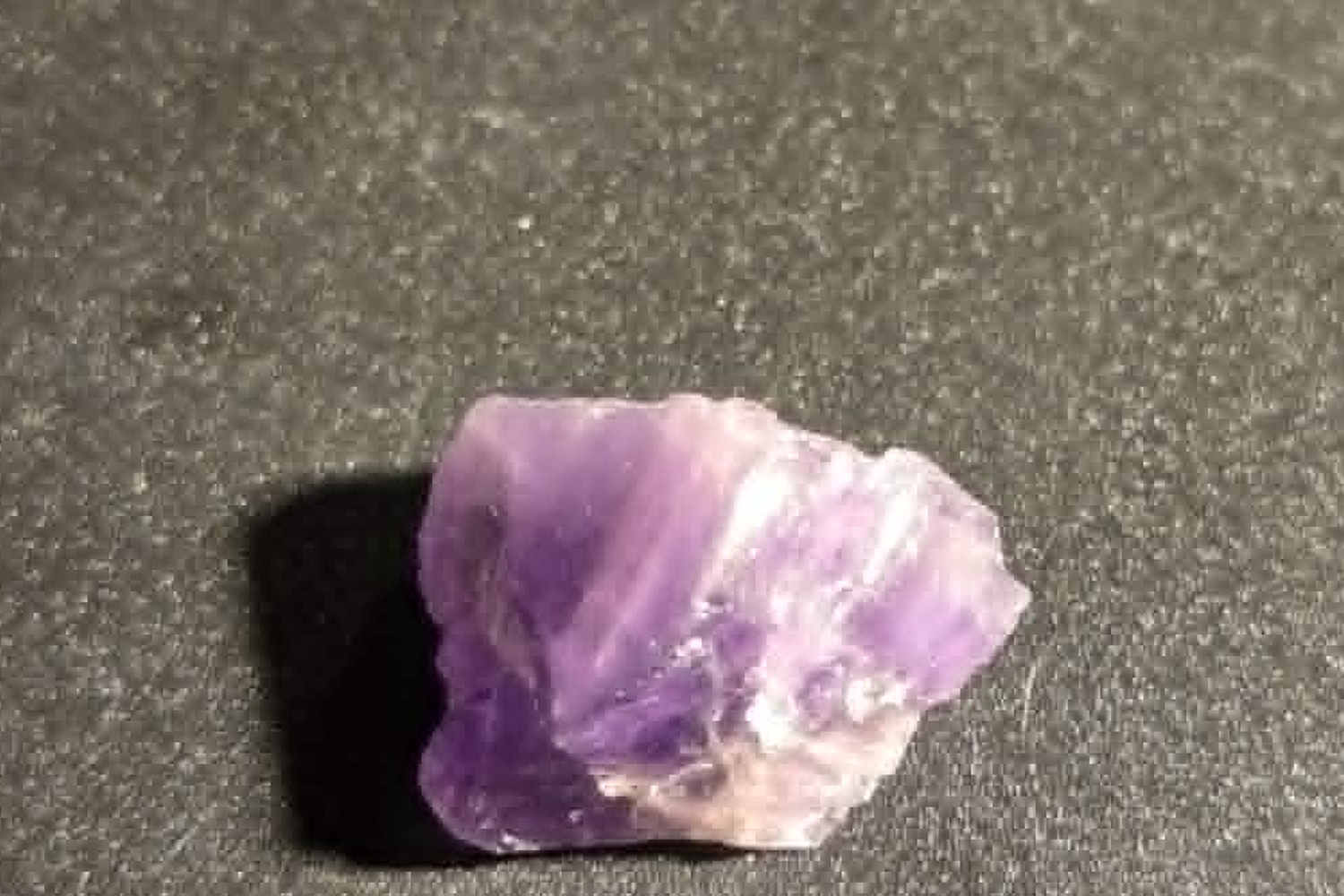
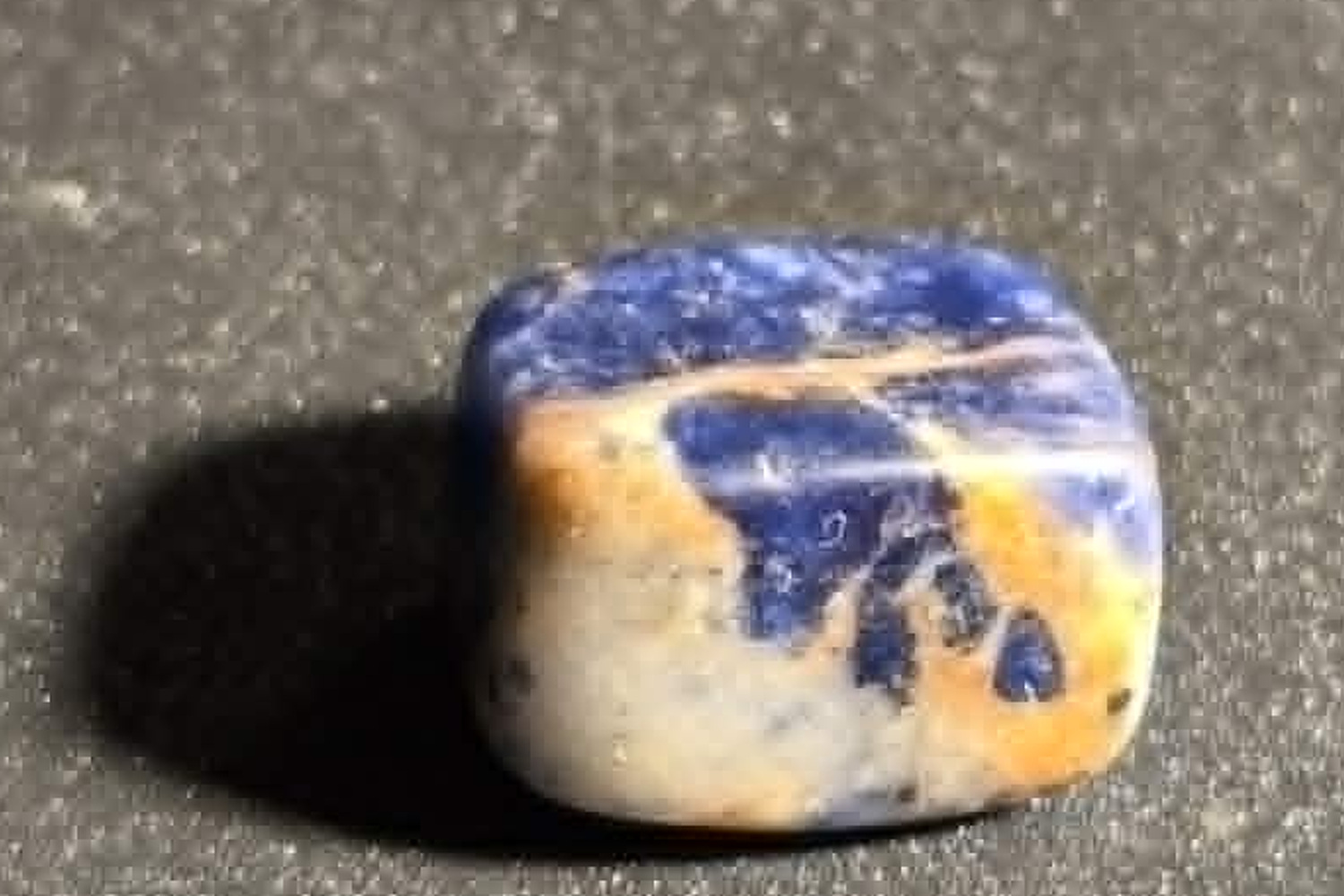
Choose the two photos above. Record three observations without naming the mineral: one colour feature, one surface feature and one shape feature. Which features can you actually see, and which are hidden by the angle? Keep those gaps in your notes.
Does a purple band prove the stone is fluorite?
No. Colour zoning can occur in both materials. Combine several observations; a colour match, a seller label or one photograph cannot establish identity by itself.
Sources and further reading
Checked 4 October 2026. General mineral information supports these comparisons; collection labels are not laboratory identifications.