Sodalite is a mineral species. Lapis lazuli is a rock containing several minerals, with lazurite responsible for its characteristic blue. Both can appear blue and white, so the pattern is a starting point rather than a final answer.
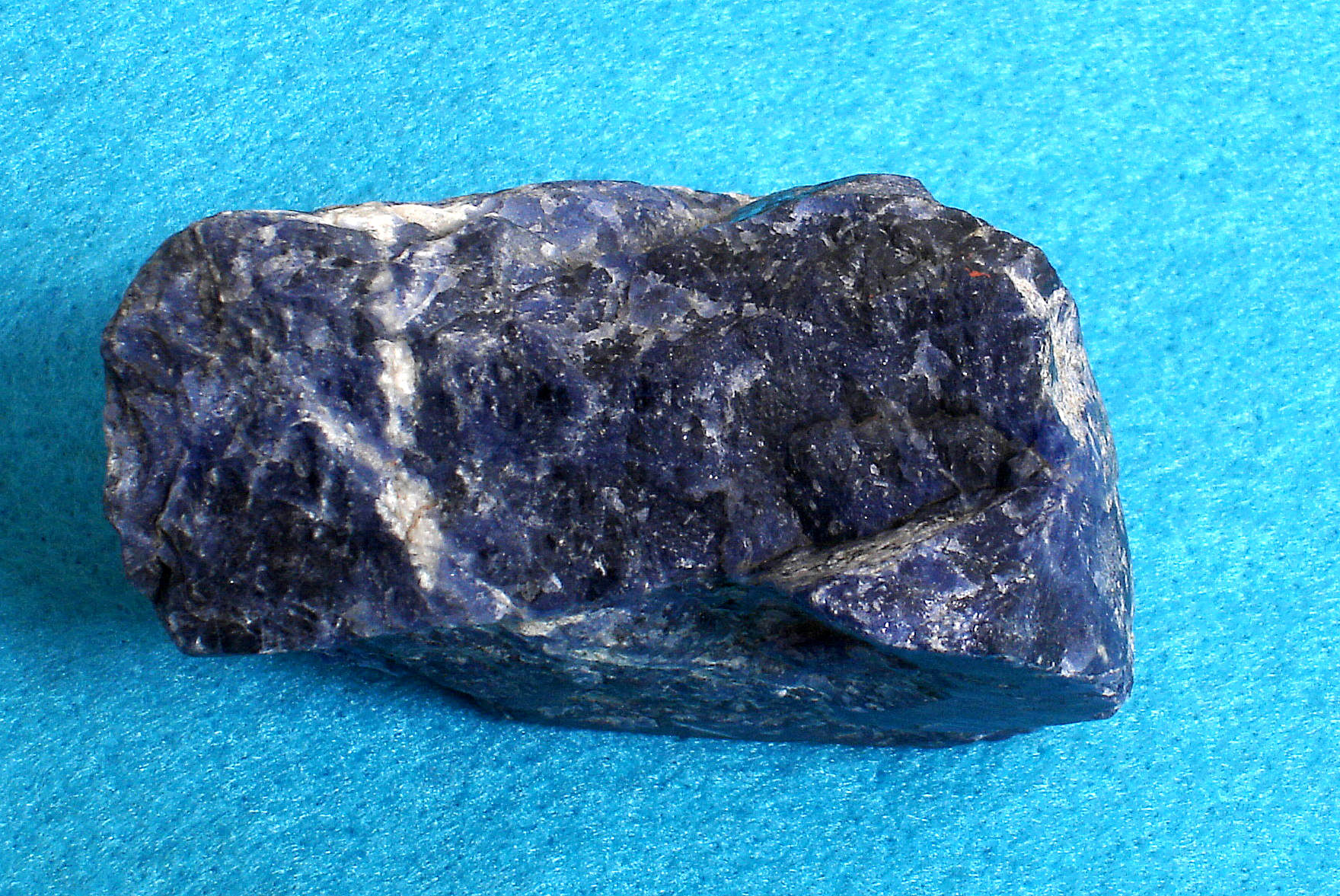
Reference sodalite-bearing rock, separate from our collection. Pale veins interrupt the blue areas; the photograph does not identify every component.
Eurico Zimbres / CC BY-SA 2.5 (via Wikimedia Commons). Original image; displayed at a smaller size.Lapis Lazuli reference specimen
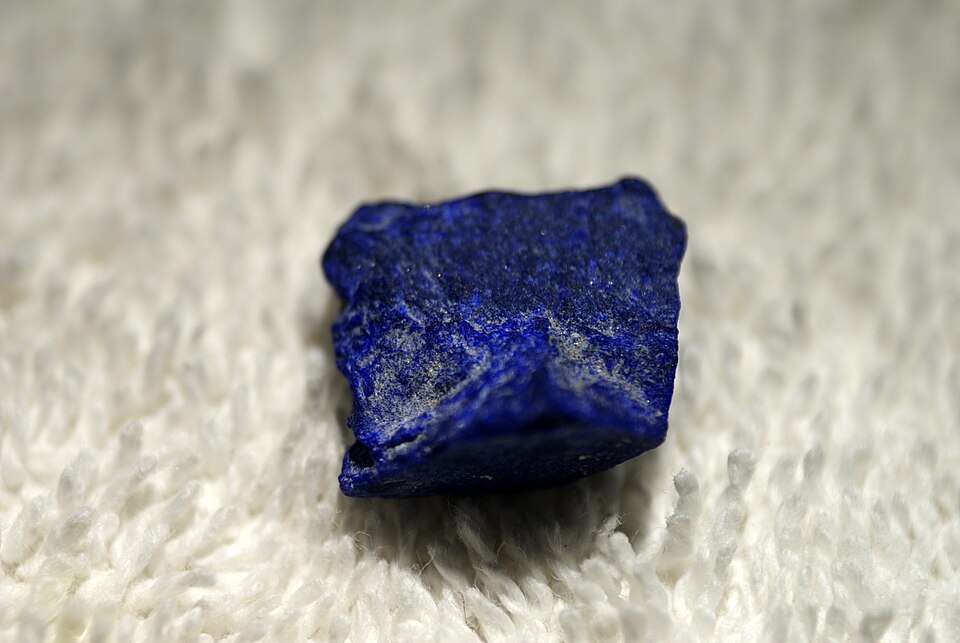
Reference lapis lazuli, separate from our collection. Look for uneven blue and pale patches; small metallic flecks may not be visible in this view.
Teravolt at English Wikipedia / CC BY 3.0 (via Wikimedia Commons). Reduced-size preview; no further image changes.
The differences at a glance
Reference properties describe the materials generally. They do not authenticate the photographed specimens.
Sodalite vs lapis lazuli: reference properties
Clue
Sodalite
Lapis lazuli
What the name describes
A mineral species; specimens can include other minerals
A rock made from several minerals
Composition
Sodium aluminium silicate with chlorine · Na₈Al₆Si₆O₂₄Cl₂
A mixture, commonly including lazurite, calcite and pyrite
Familiar appearance
Blue material, often with pale areas in a mixed specimen
Blue rock, sometimes with pale areas and metallic flecks
Mohs hardness
5.5–6 for the mineral
Typically 5–6; varies with the mixture
What colour cannot prove
Identity of every blue or pale area
Identity, treatment history or the full mineral mixture
01 · Read the clues
Describe the pattern before choosing a name.
Choose a small area of each photograph and follow the boundary between blue and pale material. Does it form a narrow vein, a patch or a scattered grain? Record that shape first. Two stones can share a blue-and-white appearance while containing different minerals.
The word sodalite names a mineral, but a specimen sold under that name may be a rock containing sodalite alongside other minerals. Lapis lazuli is already a rock name. Neither label means every part of a mixed piece has one composition.
02 · Read the clues
Gold-coloured flecks are one clue.
The familiar metallic flecks in lapis are pyrite. Their visibility depends on the particular piece and the view. Blue colour or a few shiny specks should prompt a closer look, not an automatic verdict. A photograph can miss small grains or make a reflection look like an inclusion.
In your notes, distinguish “I can see metallic-looking flecks” from “these flecks have been identified as pyrite”. Likewise, write “not visible in this photograph” when a feature cannot be seen. That is more useful than deciding that the feature cannot exist anywhere in the stone.
03 · Read the clues
Keep treatment questions separate.
Some lapis is dyed or treated with wax or oil. A pleasing, even blue colour does not establish whether treatment occurred. Ask the seller what the material is and whether any colour or surface treatment is known; retain that answer with the specimen label.
Start with a dry, soft cloth on a sound display piece and ask for material-specific care advice before using cleaners. Do not rub a stone with solvent to investigate dye. The similar hardness ranges here also make a scratch contest an unhelpful way to preserve a collection.
Try it without damaging a stone
A one-minute observation
Make two columns headed Blue areas and Pale or metallic areas. For each photo, record one shape and one uncertainty. Compare the notes without assigning a mineral name to every patch.
Does the absence of gold-coloured flecks prove a stone is sodalite?
No. Flecks may be absent or not visible in a piece of lapis. Colour, pale veins and visible flecks can help organise observations, but they do not turn a photo into a reliable identification test.
Sources and further reading
Checked 5 October 2026. General mineral information supports these comparisons; collection labels are not laboratory identifications.