Video companion · About 3 minutes to read

Your first crystals: four details to look for

Use four pauses from our beginner video to start a specimen notebook. Look at three pieces presented as quartz varieties, then compare their appearance with the dark polished piece introduced as Obsidian.

Watch on YouTube (opens in a new tab)

Original video · 8:52
Crystals for Beginners: The 10 Stones You Actually Need

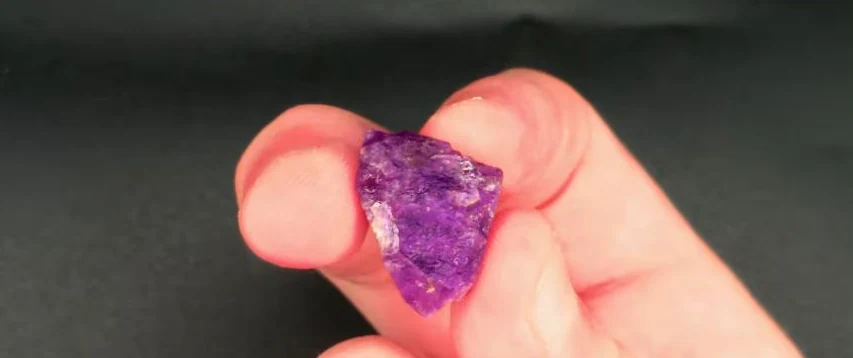
A small rough purple stone pinched between two fingers
Still from our YouTube video at 0:30.

What to notice as you watch

The episode also discusses crystal-healing traditions. These viewing notes focus on visible features, mineral facts and keeping a useful record.

Select a time to open that moment on YouTube.

  1. A small rough purple stone pinched between two fingers0:30 · Follow the purple (opens in a new tab)

    The Amethyst example has an uneven outline and patches of deeper purple. Start by describing the darkest area and where it meets a paler edge.

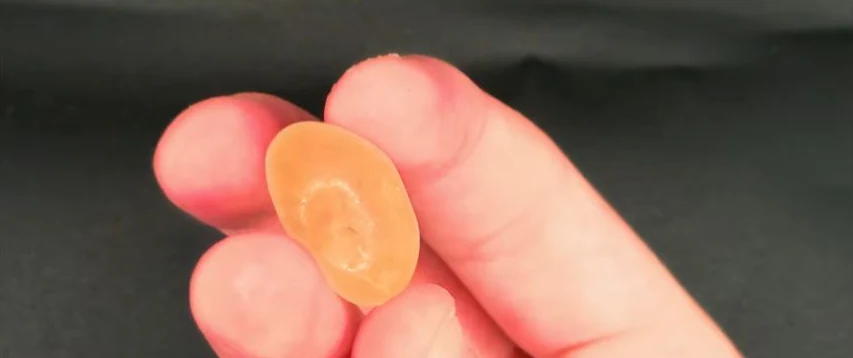
  2. A rounded translucent peach-coloured piece held up to the camera1:15 · Record the colour you see (opens in a new tab)

    The narrator introduces Rose Quartz. The piece looks warm peach on screen. Record that apparent colour, then compare it with the Rose Quartz photo under its own lighting.

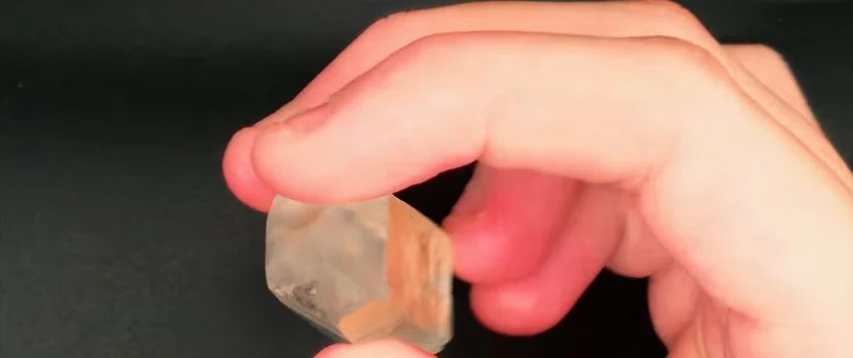
  3. A pale faceted-looking piece with cloudy and clearer areas held between fingers1:55 · Look through the Clear Quartz example (opens in a new tab)

    Some of the piece looks see-through and some looks cloudy. Sketch where the change happens and note the colour of the background or hand behind it.

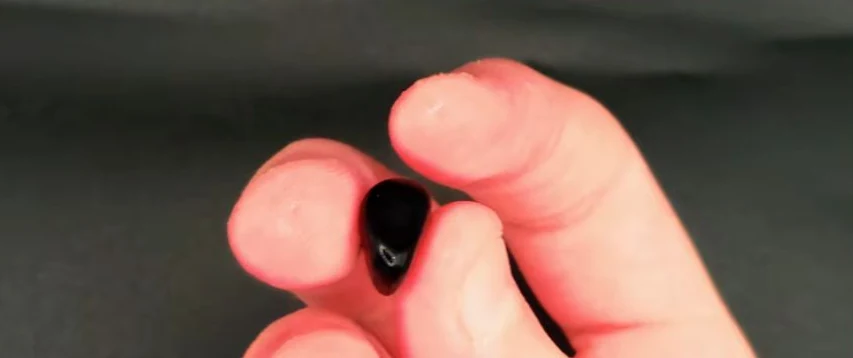
  4. A small glossy black rounded piece held between fingers4:05 · Describe the dark polished surface (opens in a new tab)

    The Obsidian example is dark and rounded. Follow the small highlight on its surface, then compare this clue with the genuine collection photos in our dark-stone comparison.

01 · Look a little closer

Start with one piece and two angles.

Start a record with the name supplied with the piece, the date you got it and a short description of what you see. Take one full photo beside a millimetre ruler and a second photo from the other side. Use the same plain background for future pieces so that the pictures are easier to compare.

At the Rose Quartz pause, the hand and lighting give the specimen a warm appearance. If you are documenting a piece at home, set it down on neutral paper. Describe the colour again and keep both observations with their lighting conditions.

02 · Look a little closer

Compare the material and the finish.

Amethyst, rose quartz and clear rock crystal are varieties of quartz. Record colour and clarity as separate clues. “Purple with a darker area at the edge” and “cloudy toward the base” are descriptions a second person can try to find on the same piece.

Obsidian is volcanic glass. A smooth dark surface is a starting clue shared with other materials. Record whether you see a line, band or reflection, then compare it with the dark-stone guides before adding a second possible name to your notebook.

Pause. Replay. Describe.

Try this while watching

  1. Choose one of the four pauses. Write the name given in the video and two features you can see.
  2. Read the matching encyclopedia guide below and record one feature a second view might help you check.
  3. Use the observation sheet to repeat the exercise with one piece you own.

Sources and further reading

Written for Rock & Crystal Secrets. Video narration and mineral references checked 20 November 2026. This is an original reading companion, not a transcript or a laboratory identification.
More video guides

Find a moment to pause, see what to look for and follow the matching mineral or collecting guide.

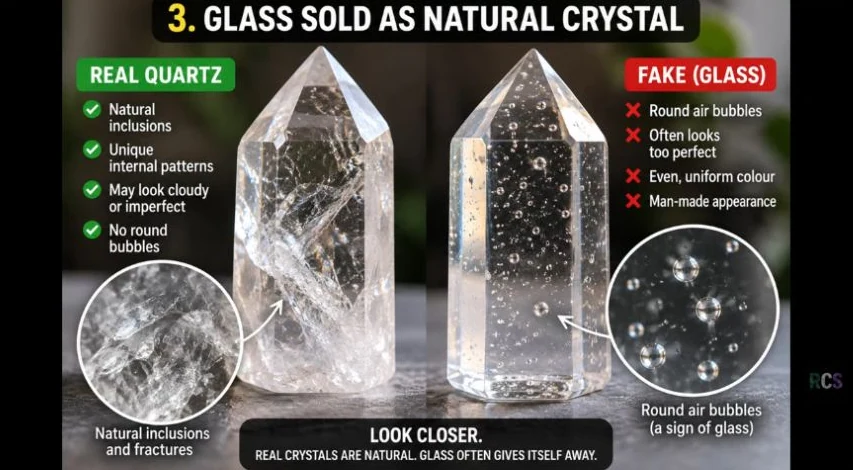
Two clear points on a comparison slide with enlarged internal details shown in circles

Five crystal-buying clues to check before you buy

Watch the examples of dye, heat, glass, assembled stones and coatings. Turn each clue into a question for the seller.

Read the video guide →
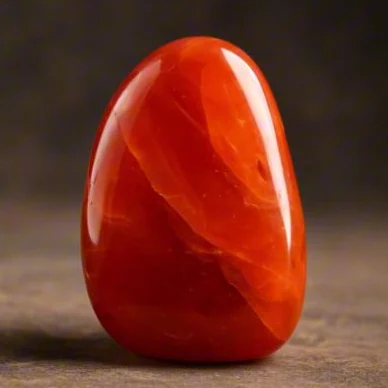
A polished red-orange stone upright with curved orange lines and bright edge reflections

Carnelian: look at the colour, then follow the carving story

Compare two orange-red examples from the video and see how a museum records a Roman ring with carved carnelian.

Read the video guide →
Amethyst collection photograph

Amethyst explained: purple quartz, heat and care

Explore the science behind our Amethyst video, clarify the heat-treatment story and learn how to care for your specimen.

Read the video guide →
Citrine collection photograph

Is your citrine natural or heat-treated?

Watch our Citrine Short, examine the colour clues and learn what to ask before buying a specimen.

Read the video guide →
Labradorite collection photograph

Why labradorite flashes as it moves

Follow the changing colour, learn about labradorescence and keep observations separate from symbolic meanings.

Read the video guide →
Volcano Agate collection specimen under UV illumination

Volcano Agate under UV: what the glow tells us

Read the UV reveal carefully, understand fluorescence and learn what a trade name or glowing patch cannot prove.

Read the video guide →
Moonstone collection photograph

Moonstone’s blue flash, explained

Explore the Short’s light effect, practise describing a moving sheen and understand the limits of a moonstone label.

Read the video guide →
← Browse all featured videos